
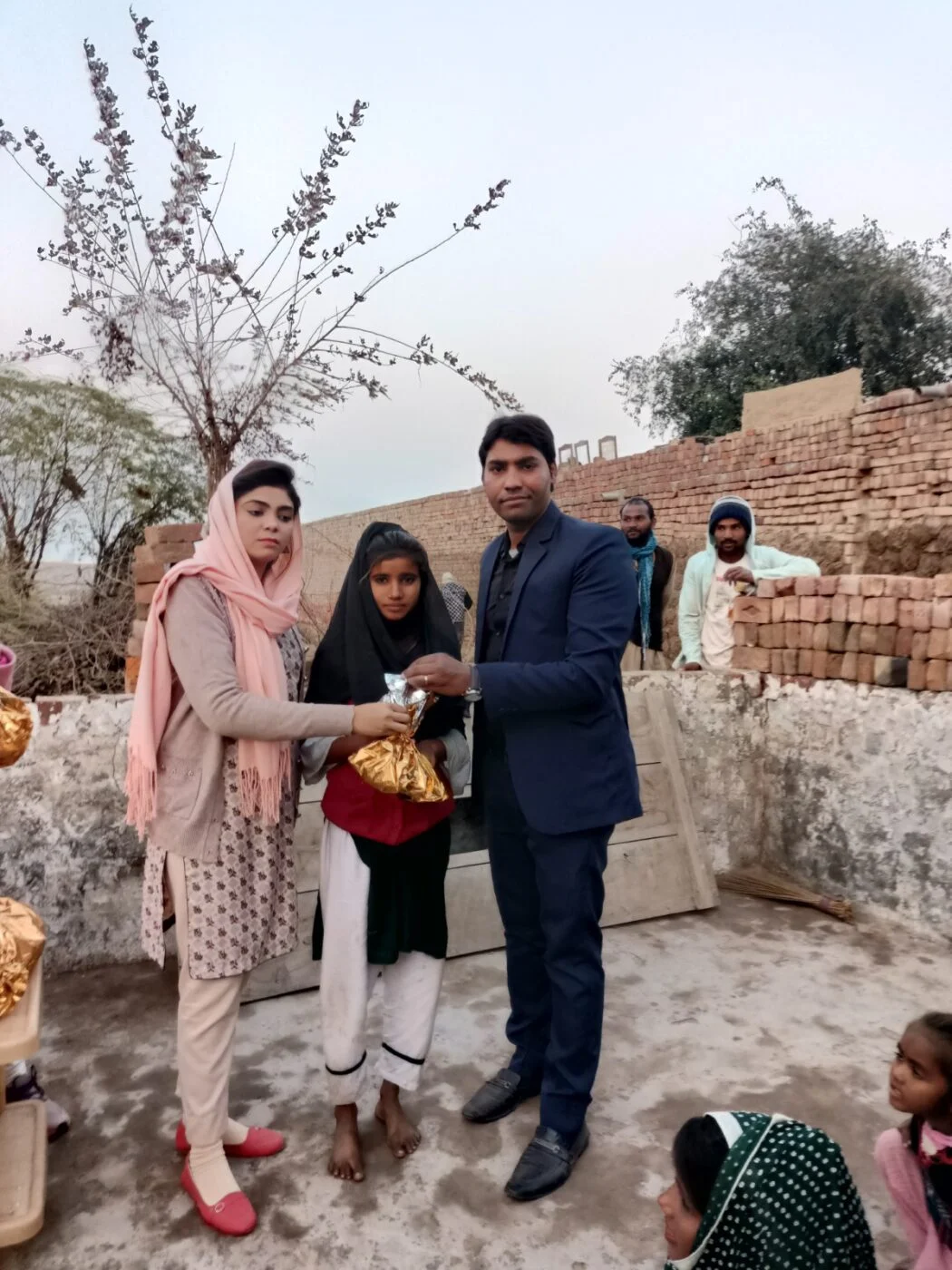
Have you ever wondered why a child would be making bricks instead of sitting in class? If you’ve driven past a brick kiln in Punjab, you may have seen it for yourself. Brick kiln children in Pakistan often miss school for reasons that have little to do with how much they or their parents value learning. In this guide, we’ll walk through what the reports say, why the problem is so stubborn, and what you can do that truly helps.
We write as a Christian foundation in Lahore. Our founder’s concern for children in these communities is part of why ZAWF exists, so this topic isn’t abstract for us. We’ve also tried to be careful: where we rely on figures, we link to the source, and we tell you when sources disagree.
The Short Answer
Most brick kiln children don’t miss school because of one problem. Family debt, low pay, distance, costs and weak enforcement of labor law tend to combine. If you only fix one, the others can still keep a child away.
How Many Brick Kiln Children Are There?
Nobody has a perfect count, and you should be wary of anyone who says they do. The U.S. Department of Labor’s 2022 findings on Pakistan report that children make up about one-third of roughly four million people working in brick kilns. The same report estimates that there are about 18,000 kilns, and that a majority operate without registration or without providing required worker benefits.
Those are large numbers, and they’re estimates. They help you understand scale, but they can’t tell you about any single family.
What About Out of School Figures?
Here’s where it gets complicated. The Department of Labor report cites an estimated 22.8 million children out of school as of 2022, a figure close to the one you’ll often see in headlines. But a Gallup Pakistan analysis of ASER 2025 puts out of school children aged 6 to 16 at about 7 to 8 percent, or roughly five million.
Why such a gap? Sources can differ in the ages they cover, their methods and their dates. We don’t think you need to pick a winner to take the issue seriously. It’s better to quote a figure with its source than to repeat the biggest one you can find.
Five Reasons Brick Kiln Children Miss School
1. Family Debt
This is the heart of it. Families can become bonded after borrowing money, often from someone such as a kiln owner, and then working to repay it. The Solidarity Center describes wages so low that debts often can’t be repaid, even after many years. When a household is trying to clear a debt, every working hand can feel essential.
2. The Direct Cost of School
Even when tuition is free, school isn’t always free for a family. The Department of Labor report lists school fees, transportation and inadequate facilities among the barriers children face. A small cost can be a big decision when money runs out before the month does.
3. Distance and Moving Around
A kiln can be a long way from a suitable school, and a family may need to go where the work is. Either of those can make regular attendance difficult. A child who keeps falling behind can lose heart quickly.
4. The Gap Between Work and School Rules
The same report points out that Pakistan’s minimum age for work (15) is lower than its compulsory education age (16), which can encourage children to leave school early. It also notes that brickmaking isn’t covered by hazardous work prohibitions, despite the health hazards children face.
5. Uneven Enforcement
Laws exist, but enforcement is hard. The report notes that Punjab’s Labor Department reportedly conducted 6,983 kiln inspections and found 239 child labor violations, with 60 arrests. It also describes limited resources and limited public data across the country.
Has Anything Worked?
There are promising signs, and it’s worth knowing about them. In January 2016, Punjab’s government began a cash incentive scheme that paid families to keep children in school rather than working at kilns. Theirworld reported in 2017 that nearly 88,000 children were selected, with an initial $20 per child followed by $10 a month.
The reasoning makes sense: a stipend can lower the cost of choosing school over work. Critics questioned whether an ongoing transfer was viable, and argued that laws against bonded labor needed stronger enforcement. So it’s not a magic answer, but it shows that money pressure is a real part of the problem.
What Should a Good Response Look Like?
If you’re considering how to help, here’s what we’d look for, and what we try to hold ourselves to:
- Listen first. Families know their own barriers better than any outsider.
- Protect children’s dignity. A child isn’t a fundraising image. Names, schools and locations should stay private.
- Keep promises small and true. It’s better to report one real activity than to claim a thousand changed lives.
- Separate help from religion. Aid should never depend on attending a religious activity.
- Support learning for the long term. Books and encouragement matter, and so does consistency.
How You Can Help
You don’t have to solve this all at once. Here are three realistic places to begin:
- Pray and learn. Read the reports we’ve linked, and share them carefully.
- Ask hard questions of any charity you support, including us. Our guide on how to vet an overseas ministry partner can help.
- Support children’s education through an organization that’s honest about what it’s doing and what it isn’t.
Frequently Asked Questions
Why do children work at brick kilns in Pakistan?
Often because their families are in debt and pay is low, so the whole household works to repay what’s owed. Reports also point to limited schooling options and uneven enforcement of labor laws.
Is child labor at brick kilns illegal in Pakistan?
Pakistan has laws covering bonded labor, but reports describe gaps in coverage and enforcement. For legal questions, please speak to a qualified lawyer or a labor rights organization.
How many children are out of school in Pakistan?
It depends on the source and method. The U.S. Department of Labor cites 22.8 million as of 2022, while an analysis of ASER 2025 estimates about five million aged 6 to 16.
Can I sponsor a brick kiln child through ZAWF?
Yes. You can sponsor a child’s education through ZAWF, and each child’s identity is kept private.
A Final Thought
The real barrier for these children is rarely a lack of hope or ability. It’s a set of pressures that adults, laws and communities can change, one step at a time. So what’s one step you could take this week? We’d love to talk with you about supporting this work, or simply answer your questions at info@zawf.org.